Scout Tickets
The “scout ticket” is a paper or digital file that summarizes all the information available on a single well. The basic data like the well name, location, depth, and date completed will be found here. Also, there will be a record of the major formation tops encountered in the well, what “treatments,” if any were used; whether the well was fracked or not and the volumes of oil or gas the well produced initially. It is a one-stop-shop for finding out the basic information about a well!
Most states allow energy companies to hold some drilling information secret, perhaps for a year. This is done to protect trade secrets for a short while before the information becomes publicly available. Electric logs are often kept “tight” for a year or so. This ensures the operator who made the discovery will have the opportunity to acquire additional necessary leases before the “cat is out of the bag.”
Early Scouting
In earlier days, oil companies employed “scouts” to keep up with the activities of other operators. These people acted as corporate “spies” to make sure the competition was not getting a leg up. Even though they spied on each other, “scouting” was a very honorable occupation!
 The scouts scoured the oil fields looking for new sources of information. If a scout saw a load of casing heading out of town, he might ask the driver where it was headed, and take a quick count of the pipe. A scout could watch a drilling location from a public road, and determine the drilling depth and many other things from a mile away. He could tell that was happening at the location just by observing who came and went. A night sitting quietly in a barroom, listening carefully, could lead to a boatload of information. The scout performed a job very similar to a newspaper reporter, which involves a lot of sneaking around and being nosy.
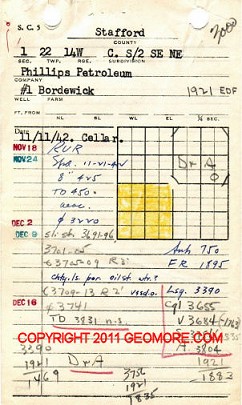
Scouts kept track of the information they had gathered on each well on “scout tickets.” The writing on a scout ticket looks like mumbo-jumbo to most people, but a petroleum geologist (and a scout) can easily read it.
Scouts often met with each other to share information. They would form “clubs” where information could be traded among club members. You had to “give” in order to “get.”
Scouting started to fall out of favor in the later part of the 20th century, as new technologies made information-sharing easier. Corporations like PI (Petroleum Information) were formed for the purpose of providing drilling information. But there are still a few scouts around today!
Old Scout Data Filed With The State
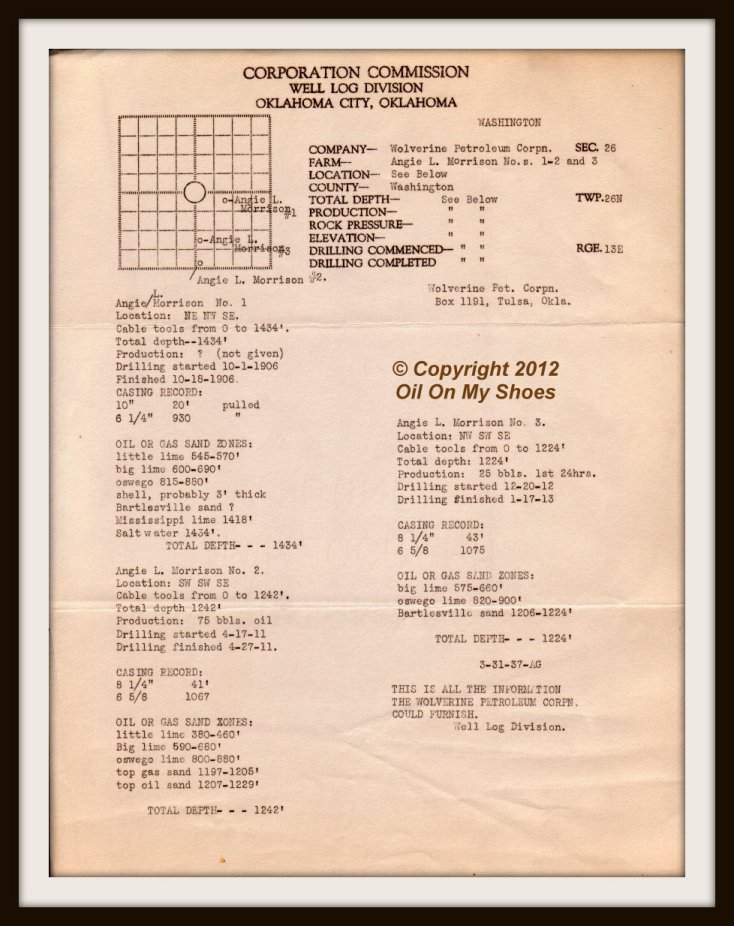
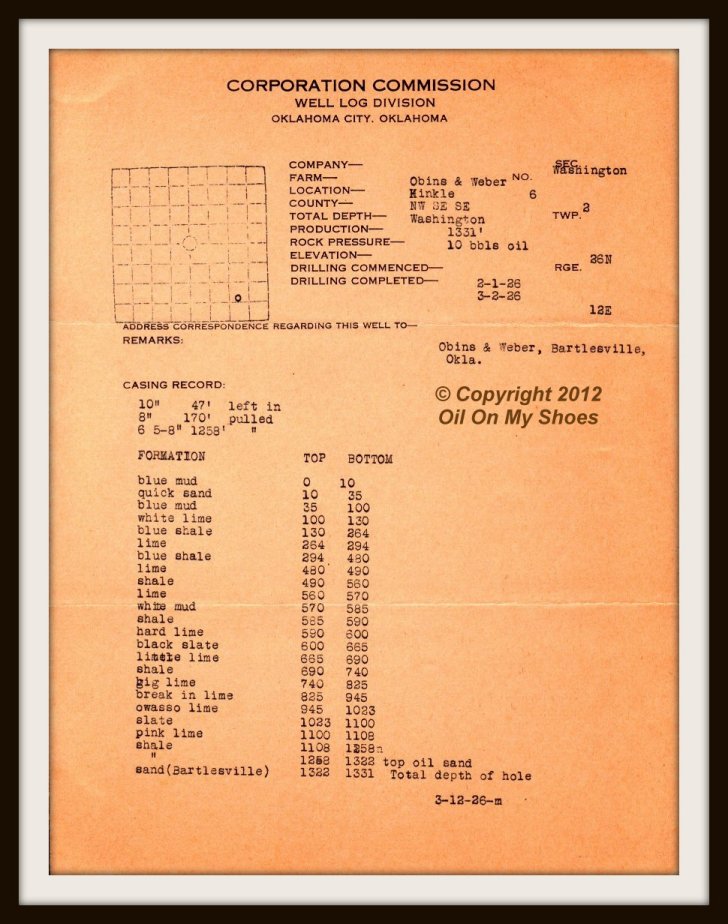
Early on, states started requiring companies to file some well data. Many companies did not use geologists, especially prior to the 1920’s. Terms like “white mud” and “shell” reflected the driller’s views and opinions of the well samples. Even today, drillers keep their own descriptions of the drilled samples. Click the examples:
An Interactive Scout Ticket
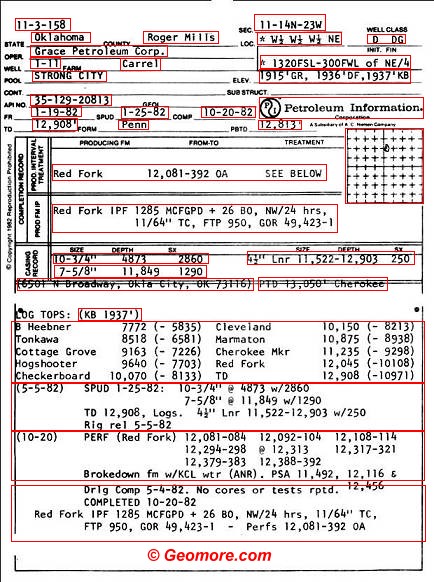
The scout ticket below is from the “Carrel #1-11,” a well located in Roger Mills County, Oklahoma. The Carrel produces oil and gas from the deltaic Red Fork sand.
Hover over sections of the scout ticket to get an explanation: